RFIDrone: when a drone reads radiofrequency

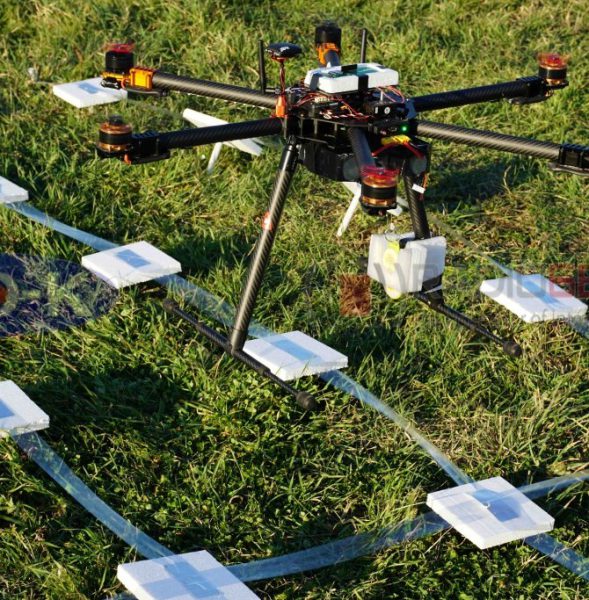
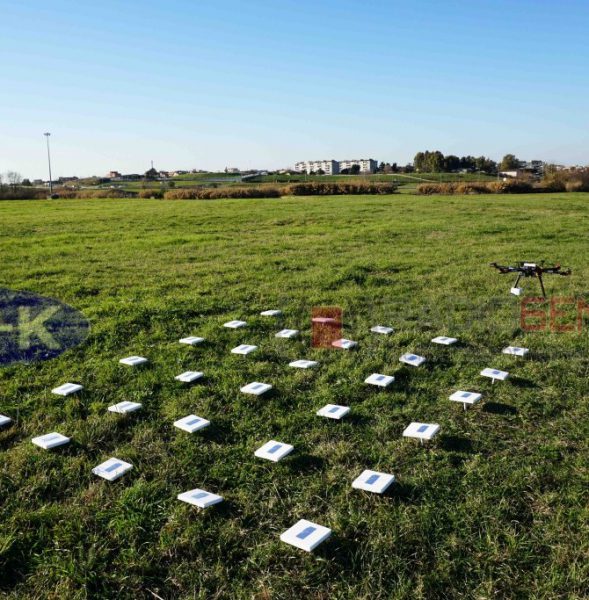
The partnership between GEO-K and RADIO6ENSE aims to build up a system that exploits the paradigm of radiofrequency identification (RFID) and the potentialities of Unmanned Aerial Vehicles (UAV).

The RFIDrone project will be developed considering two main approaches: the first, named DroneReader, consists of a UAV hexacopter able to carry out autonomous missions in which the data transmitted by RFID are collected and used for creating thematic maps or for characterizing the object under analysis.  The second, named DroneTAG, consists of a UAV acting as a RFID, becoming itself a TAG with autonomous re-locating capabilities. In both cases, the system offers revolutionary potentials in the monitoring of structures pre- or post-event (bridges, buildings, dams), precision farming applications, surveillance, and logistics.


EO Lab in Tor Vergata and ESA Bic Lazio will create the Italian FabSpace

The Fab Space 2.0 project (led by the French university Toulouse III Paul Sabatier) was approved under the Horizon 2020 program: 3,5 million euros to create innovative and space-oriented fab labs in 6 European countries.

Universities are the protagonists and in particular those of France, Italy, Belgium, Germany, Poland, Greece. They will become (even more) centers for innovation. According to the project partners, Fab Space 2.0 will concentrate in a single territorial area of ​​research and innovation also the decisive contributions for a strong socio-economic and environmental effect: innovation guided by geo-information data, mainly derived from Earth observation space missions.

Universities must adopt the new role of innovation co-creators in the context of Science 2.0. They must realize the future scenario in which open data come into play in a creative environment: there, the developers who come from civil society, industry and academic research, public and territorial administrators can meet, work together and co-create new tools and new business applications.
So here is the new type of fab lab: the FabSpaces. They will be a key point in which to find large varieties of data (including ‘spatial’ data) and free tools for data processing and software, all for designing new applications. A real innovation realized thanks to the knowledge of data. The link between universities, industries, public administration and civil society will be reinforced by local and European initiatives for application development. Around 1,500 European students and researchers are expected to use FabSpaces.


In Italy, the protagonists are the ESA BIC Lazio incubator and the EO LAB – the Tor Vergata Earth Observation Laboratory.
The laboratory of the University of Rome Tor Vergata, with the coordination of Professor Fabio Del Frate of DICII – Department of Civil Engineering and Computer Engineering, will be responsible for the creation of real and virtual laboratories that will use the latest web technologies for both training and technology transfer in the fields of geoinformation and Earth Observation, all in close connection with the progress of scientific research.

The financing of the project (356 thousand € will go to Tor Vergata / EO Lab) – says Fabio Del Frate – is a source of great satisfaction because it enhances the activities of our University and our Department especially in the field of Earth Observation“. “At the same time – continues Del Frate – the utmost effort will be needed to achieve, in collaboration with the other organizations, the objectives presented in the proposal. In particular, as a university, the ability to significantly strengthen the role of meeting point between training, research and technology transfer in the aerospace and geo-information sectors, focusing on the new generations of students and the requests coming from society civil“.


Some useful links:

Fabspace 2.0 website
Tor Vergata Computer Science, Control and GeoInformation Doctorate


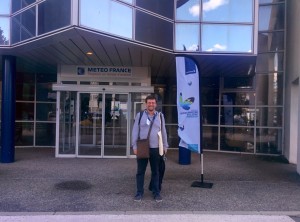
GEO-K StormTrek at 2015 EUMETSAT Meteorological Satellite Conference

The number of the extreme meteorological events has increased in the last few years and the trend should be the same for the next future”.

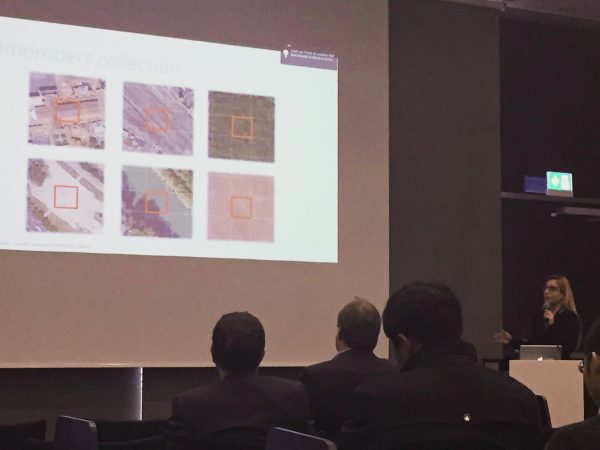
GEO-K participated in the 2015 EUMETSAT Meteorological Satellite Conference, held in Toulouse, France, 21-25 September, presenting StormTrek, the innovative algorithm for the nowcasting of extreme meteorological events.

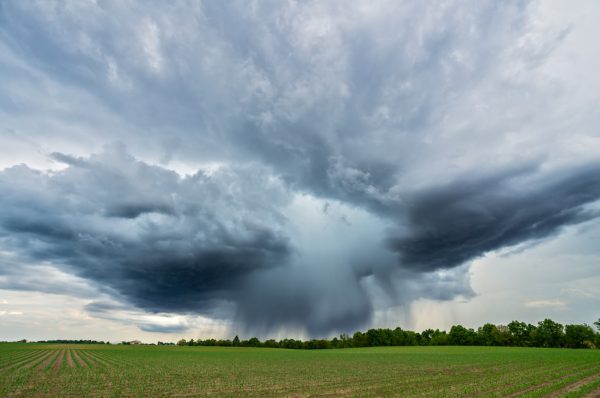
These events generally develop very quickly and on a small scale, nevertheless they may provoke several damages and affect also the human’s safety. For these reasons it is very important to monitor and prevent these natural hazards by means of advanced techniques which must be able to:
● detect the event as soon as possible
● track the behavior of the event
● predict the short term development of the event

StormTrek is a novel multispectral algorithm for the detection, the tracking and the short term forecast of convective objects developed by GEO-K.
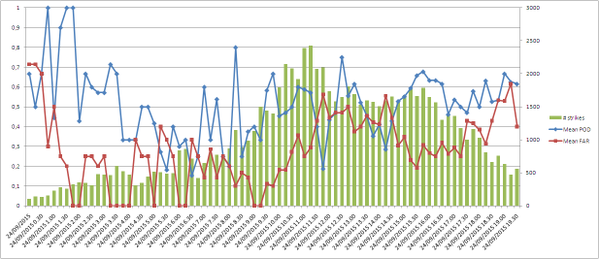
The model is already operational and some web services based on its output are already available. Our work is aimed to show the results of the validation activity developed in the last year. StormTrek validation involves the comparison with benchmarks like the Rapid Development Thunderstorms, developed by Meteo France, and the lightning activity over Europe and South Africa
”.

Here is the link to the presentation.

“Short-term weather forecast for precision farming” at the XVIII AIAM Convention 2015

Precision Farming will benefit from satellite weather forecasting.

GEO-K took part in the XVIII AIAM Convention 2015, the annual Convention of the Italian Association of Farm-Meteorology, hold at San Michele all’Adige (Trento), 9-11 June 2015.

At the meeting, the use of satellite data and short-term weather forecast (nowcasting) was proposed as an important tool to detect dramatic weather events, such as severe thunderstorms and hailstorms.

Take a look at the interview (in Italian only).


Urban Imagery for thermal behavior of cities at JURSE 2015

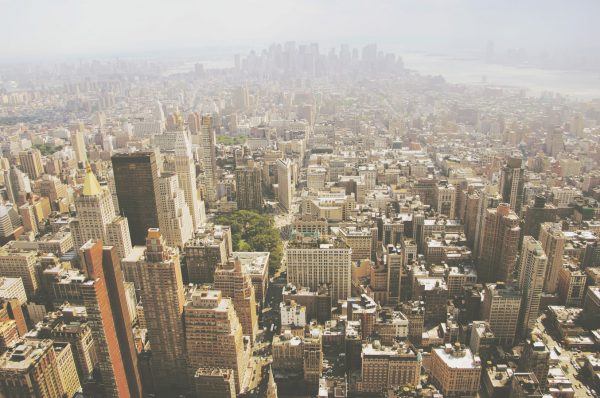
Earth Observation (EO) systems and the advances in remote sensing technology increase the opportunities for monitoring the thermal behavior of cities.
Several parameters related to the urban climate can be quantified from EO data products, providing valuable support for advanced urban studies and urban climate modeling.
The study has been presented at the last JURSE congress in Lausanne. In this study, remote sensing techniques are applied to derive quantitative information necessary to identify possible zones with homogeneous thermal characteristics (Local Climate Zones LCZ).

Parameters like the pervious and impervious surface fraction, the surface albedo, the building density, the mean building/tree height, and the sky view factor are quantified for a study area in Crete, Greece. The EO products are then used under a methodological framework to map the LCZ.

Individual EO products, as well as the LCZ classification itself, is useful to urban climate modeling and studies to assist in planning and decision making.

Future research includes the investigation of more urban parameters extraction with EO data, with the ultimate goal of developing a methodology adaptable to the Sentinels.

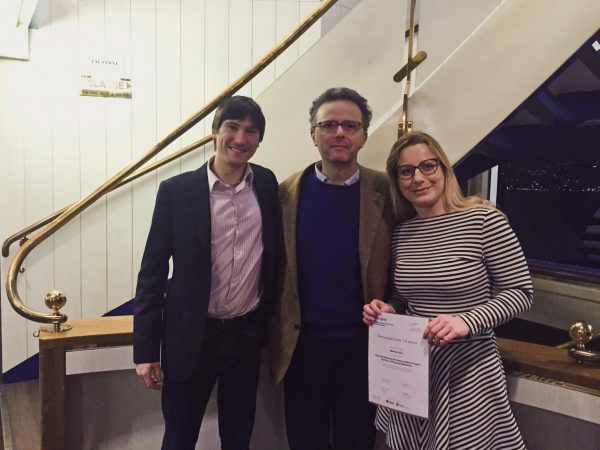
GEO-K won the Best Ideas challenge at the GMES Masters Competition 2012

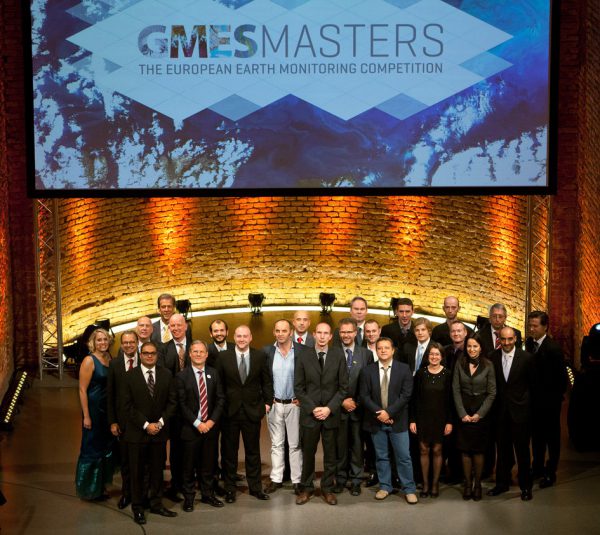
GEO-K and SERCO prized at the Global Monitoring for Environment and Security (GMES) Masters competition (GMES MASTERS 2012). GEO-K and SERCO won the “Ideas Challenge” competition proposing  “MOSP-RIOS – OFF-SHORE OIL SPILL & FLARING MONITORING”, a service for the monitoring of gas flaring and of oil spilling from off-shore platforms using GMES products.

The competition, in its second year, received more than 100 innovative business proposals from 20 European countries. The 2012 winners were announced at the event, in Munich, organized by Anwendungszentrum Oberpfaffenhofen (AZO) GmbH, on 25 October 2012.